The Bogey Hole, Newcastle: the convict-cut bath below King Edward Park
Convicts cut it into the rock shelf for the commandant of a penal settlement. Two hundred years later it is still the most famous swim in Newcastle.
By Ruth Ellery · First published · Updated · 5 min read
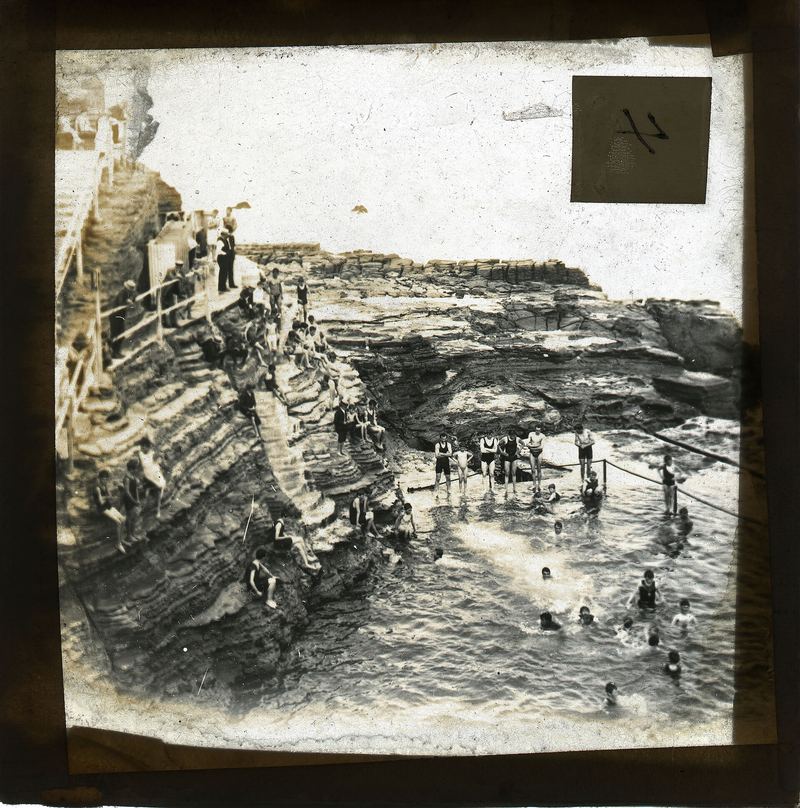

Visiting today
- Where
- Below King Edward Park; car park off York Drive, Newcastle East
- Cost
- Free
- Lifeguards
- Not on the City of Newcastle's patrol list, so swim with care
- Access
- Steep stairs; does not cater for people with access needs (NSW Government)
- Before you go
- Stay out in a big swell: waves break right over the wall, and it is only about 1.5 metres deep
The Bogey Hole was cut into the sandstone shelf at the foot of Shepherds Hill on the orders of Major James Morisset, commandant of the penal settlement at Newcastle from December 1818 to November 1823. It was his private bath, and for its first forty years it was known as the Commandant's Baths, or Morisset's Bath.
Nobody wrote down when the work started or how long it took. Most accounts, including the State Heritage Register, date the first cutting to between 1819 and 1822, when Morisset was building roads, wharves and a breakwater with convict labour. Governor Lachlan Macquarie visited in 1821 and admired his public works.
A bath for the commandant
The pool Morisset's convicts cut was much smaller than the one swimmers use today. Whether they enlarged a natural rock pool that Awabakal people had used is not known. What survives is probably the oldest European-built structure left in Newcastle, and one of only two from the first years of the settlement.
The earliest picture of it is a pencil sketch by the artist Conrad Martens, who visited "Morrisets Bath" on 13 May 1841. The drawing is held by the State Library of New South Wales.
How it got its name
"Bogey" was an Australian word for a bathe or a swim, said to come from the Dharawal language spoken south of Sydney, and by the 1840s it was ordinary colonial English. Researchers at the University of Newcastle's Hunter Living Histories have found the name "Bogey Hole" in a Newcastle newspaper as early as 1861.
Opened to the town
In 1863 the Crown set aside 40 acres of the clifftop for public recreation, the land that became King Edward Park, and control of the bath passed to Newcastle Borough Council. It was a men's bath first; women were allowed in only at set times.
In 1884 the council had it enlarged to its present size, about seven times the original, and deepened it. An iron safety rail was run along the access track, and two bridges, stairs and ledges were cut into the rock. The chains along the seaward wall date from the same works. Ralph Snowball photographed the pool on glass in 1891.
The time to see the pool in all its glory was in the morning, when the sun stood high over the sea. Boys gathered there as if by magic, playing naked the whole forenoon. Lincoln Colcord, writing in 1914 of a visit in 1895, when he was 12 and sailing with his parents on a Maine freight ship
Colcord remembered the "daring boys" who climbed out along the sea wall and hung on to the chain rail "holding their breath as the crests of rollers passed over them in a smother of foam". Newcastle children still do it.
A dangerous place to swim
The sea has always made the Bogey Hole risky, and the University of Newcastle's Hunter Living Histories researchers have traced a long list of accidents in the newspapers. In 1879 heavy seas swept a man into what the papers called "the well-known dressing cave". Rockfalls were a recurring danger: half a ton of rock fell into the bath in 1908; James Clunes died in 1922 after a rockfall while building a path to the site; a boulder crashed through the women's dressing sheds in 1940, without injury; and in 1946 a rockfall destroyed the caretaker's cottage and fatally injured the caretaker, Alexander Stevens. Two young men drowned in 1948 while gathering weed from the rocks.
The deaths did not stop with the old days. A man drowned in 2003 after being swept from the rocks, the site was closed in 2008 after deaths and serious injuries, and in 2010 a young man died after hitting his head on a submerged rock. That history is why the advice above about the swell, and about never jumping in, matters.
From changing sheds to caretaker
The bath grew up around the swimmers who used it. Dressing sheds and showers went in in 1893, fed by water piped about 150 yards from a natural spring. In 1900 the retiring mayor organised works to stop bathers being "violently dashed into the caves". The council allowed women to use the bath on two afternoons a week from 1911. After the Second World War a caretaker's cottage was built, the old timber change sheds and picket fence were taken away, and the steps and fencing were changed again.
The Bogey Hole today
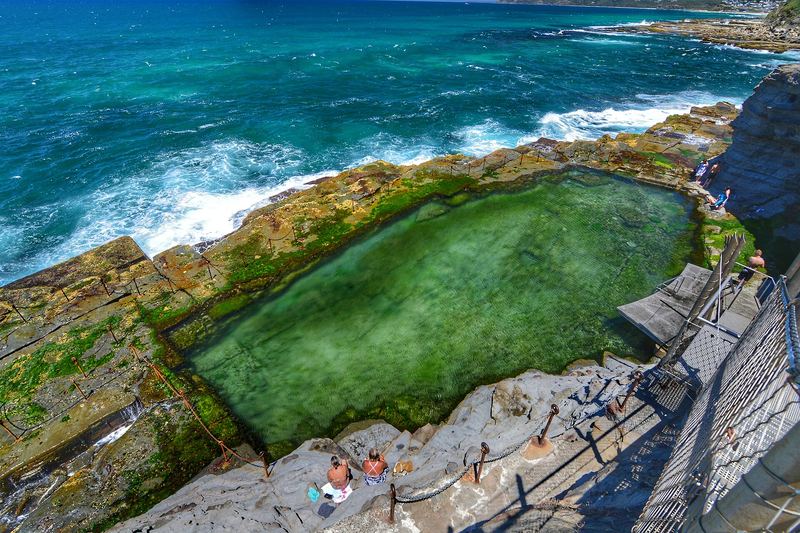
The pool is about 1.5 metres deep and takes the full force of the sea in a big swell. It was added to the NSW State Heritage Register on 21 November 2003. In a big swell the waves break right over the wall. Check the City of Newcastle's beaches and baths page before going down, and never jump from the cliff into water that shallow.

Visiting
The Bogey Hole is free to visit. The NSW Government lists its address as York Drive, Newcastle, at the foot of Shepherds Hill below King Edward Park, with a car park nearby. The way down is a steep track and steps cut into the rock, and the site does not cater for people with access needs.
The pool is not patrolled by lifeguards: the City of Newcastle lists only its beaches and its two big ocean baths for patrols. Go down on a calm day, ideally around low tide, when the water in the pool is still. When a swell is running, waves break over the seaward wall and can sweep people off the ledges; the chain rail is there for a reason. The City of Newcastle's visitor information team, on (02) 4974 2109, can tell you about current conditions and any closures.
From the top of the track, the view takes in the Bogey Hole, Newcastle Beach to the north and the coast south towards Merewether. King Edward Park above it, set aside in 1863, has its own story, as does the Newcastle Ocean Baths a short walk away.
Sources
- The Bogey Hole, NSW State Heritage Register entry 01678 (via Wikipedia, CC BY 4.0)
- The mysterious origins of the Bogey Hole, Hunter Living Histories, University of Newcastle
- Ocean baths in Newcastle, City of Newcastle
- NSW Government, Bogey Hole visitor page (free entry; access)
- City of Newcastle, Lifeguard patrols (lists only the beaches and the two ocean baths)